Exploring Metal Castings and their practical uses across multiple industries
Wiki Article
Trick Advantages of Utilizing Metal Spreadings Across Different Sectors
Metal spreadings offer as an essential element in various industries, providing distinctive advantages that boost performance and effectiveness. Their design versatility enables elaborate forms, while their material properties add to general sturdiness. Cost-effectiveness and sustainability further highlight their importance in modern manufacturing. As sectors proceed to advance, recognizing the full scope of advantages given by metal castings becomes crucial for critical decision-making. What implications do these advantages hold for future advancements?Boosted Layout Adaptability
Although typical production methods often impose constraints on design intricacy, steel spreadings provide amazing adaptability that makes it possible for complex shapes and attributes. This versatility enables developers to produce parts that would certainly be tough or difficult to achieve with various other techniques. The casting process, which includes putting molten metal right into molds, can suit a selection of geometries, making it suitable for diverse applications ranging from vehicle to aerospace.In addition, the capacity to produce both tiny and big components with thorough layouts boosts the general performance of the products. Developers can enhance weight and performance by integrating complicated interior structures, such as cooling networks or reinforcement ribs (Metal Castings). In addition, steel castings can promote the incorporation of multiple functions into a single part, decreasing the demand for setting up and decreasing potential factors of failing. As a result, the boosted design flexibility of steel spreadings not just fosters development however likewise adds substantially to performance in manufacturing procedures
Improved Product Properties
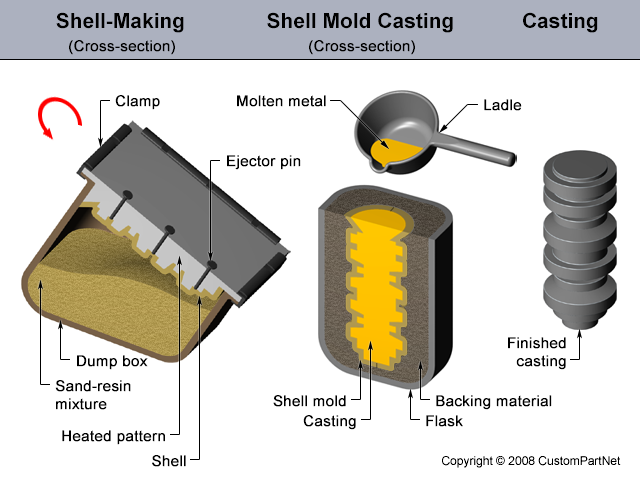
When considering the advantages of metal castings, one of one of the most substantial advantages depends on their boosted material residential properties. Metal castings frequently display improved stamina and sturdiness compared to other making techniques. This boosted resilience is credited to the controlled cooling procedure throughout spreading, which enables an uniform microstructure. As a result, cast metals can stand up to higher degrees of anxiety and exhaustion, making them excellent for requiring applications.
Steel castings provide superior corrosion resistance, specifically when alloys are made use of to boost performance in rough settings. This characteristic expands the life expectancy of parts and decreases the need for regular replacements. In addition, the capacity to develop complex shapes without endangering structural stability even more enhances the capability of actors components. Industries varying from automobile to aerospace benefit from the trustworthy and durable nature of metal castings, ensuring peak performance and safety and security in their applications.
Cost-Effectiveness and Decreased Waste
Steel spreadings present a significant advantage relating to cost-effectiveness and decreased waste, matching their enhanced material properties. Typical manufacturing methods commonly call for substantial machining and ending up processes, which can produce significant scrap product and incur high labor expenses. In comparison, steel spreading permits the manufacturing of complicated shapes in a solitary process, reducing the demand for added processing and reducing material waste.Metal spreading makes use of mold and mildews that can be recycled numerous times, better decreasing production prices over time. Aluminum Castings. The capacity to cast complex layouts also suggests that makers can accomplish greater design flexibility without compromising on high quality, consequently preventing expensive redesigns. On the whole, the cost-effectiveness of metal castings not just benefits suppliers by decreasing expenses yet additionally sustains sustainability initiatives by lowering waste. This double advantage makes steel spreadings a recommended selection across various sectors, consisting of auto, aerospace, and construction
Increased Manufacturing Performance
Enhanced production effectiveness is a considerable advantage of steel spreadings, as it promotes structured manufacturing procedures. By maximizing these procedures, firms can effectively lower product waste and attain faster turnaround times. This mix not just enhances efficiency however also adds to general operational excellence.
Streamlined Manufacturing Processes
As producing needs develop, the fostering of streamlined procedures comes to be crucial for boosting manufacturing performance. Metal castings play a crucial function in accomplishing this objective by helping with faster manufacturing cycles and decreasing preparations. Their fundamental design flexibility permits manufacturers to produce complex shapes with minimal setting up demands, thereby streamlining workflows. Advanced spreading techniques, such as precision spreading and 3D printing, contribute to greater precision and uniformity, further maximizing operations. By incorporating metal castings into producing processes, companies can attain greater automation, which decreases hand-operated treatment and speeds up throughput. Structured processes not just boost performance yet also enable producers to respond promptly to market changes, ensuring competitiveness in an increasingly vibrant landscape.Minimized Product Waste
Minimizing material waste is a vital benefit of utilizing metal spreadings in production. This process permits near-net-shape manufacturing, where parts are developed with minimal excess material. By utilizing metal casting techniques, manufacturers can substantially reduce the quantity of scrap produced contrasted to typical machining approaches. This reduction in waste not just saves raw products but additionally decreases prices connected with product purchase and disposal. In addition, less waste adds to more lasting production methods, straightening with ecological objectives. The efficiency accomplished through metal spreadings improves general production procedures, making it possible for business to enhance resource use while keeping high quality requirements. This strategic method inevitably causes enhanced economic efficiency and a reduced ecological footprint, benefiting both producers and culture at huge.Faster Turn-around Times
Faster turnaround times stand for a noteworthy advantage in the domain name of metal spreadings, improving overall production effectiveness. By simplifying the casting procedure, producers can substantially lower lead times, enabling quicker distribution of completed products. This effectiveness is particularly important in industries that demand rapid response to market adjustments, such as aerospace and vehicle fields. The ability to produce parts quickly not only meets customer assumptions but also lessens downtime in manufacturing lines. Furthermore, developments in innovation, such as enhanced mold layout and automation, add to these expedited procedures. Faster turn-around times in steel casting not just strengthen functional result yet likewise provide an affordable edge, allowing firms to react quickly to developing customer needs and minimizing the danger of obsolescence.Superior Stamina and Toughness
While different materials complete for preeminence in production, metal spreadings constantly demonstrate premium strength and toughness, making them a suitable choice for countless applications. The intrinsic buildings of steels, such as their high tensile strength and resistance to use, guarantee that spreadings can endure intense operational problems without failure. This sturdiness converts right into longer life span for elements, minimizing the regularity of replacements and maintenance.Furthermore, the capacity to create complex geometries with metal spreadings enables makers to make components that enhance stamina without adding unneeded weight. This is especially beneficial in industries that focus on performance and performance, such as aerospace and automotive. In enhancement, steel spreadings display outstanding resistance to corrosive atmospheres and severe temperature levels, enhancing their applicability in challenging settings. Overall, the remarkable toughness and toughness of steel castings position them as a fundamental product in design, adding to the integrity and long life of numerous products and systems.
Adaptability Throughout Industries
The intrinsic stamina and longevity of steel castings make them a versatile selection throughout a vast array of markets. From automotive manufacturing, where precision-engineered components are vital for performance and safety and security, to aerospace, where light-weight yet robust components are vital for flight, steel castings play a significant role. In the building and construction sector, spreadings are utilized in architectural elements and architectural frameworks, making certain long life and stability. The energy sector makes use of metal castings in machinery and equipment, assisting in efficient operations in power generation and renewable energy systems. Additionally, the medical field take advantage of personalized castings used in medical instruments and gadgets, highlighting the requirement for dependability. This flexibility permits suppliers to fulfill distinct specs and regulatory needs, boosting product performance and efficiency. Overall, the convenience of metal castings positions them as an important resource across various fields, driving advancement and performance.Contribution to Sustainable Practices
Steel spreadings play a substantial duty in advertising sustainable methods via their resource recycling effectiveness. By minimizing waste generation and executing energy preservation methods, the spreading procedure demonstrates a dedication to environmental responsibility. This method not only benefits producers yet additionally contributes favorably to the more comprehensive community.Source Recycling Effectiveness
Highlighting source reusing effectiveness, metal castings play a crucial role in lasting methods by minimizing waste and reducing the demand for brand-new raw materials. The procedure of reusing metals is highly efficient; it allows for the reuse of scrap products, which can be thawed down and changed into new castings. This practice not only preserves power however likewise decreases environmental impact by lessening the need for mining and removal tasks. Additionally, recycled metal maintains its integral residential properties, making sure that the top quality of spreadings continues to be high. This way, industries that include recycled metals add significantly to a circular economy, promoting sustainability while concurrently decreasing prices linked with basic material purchase. Wisconsin Aluminum Foundry. This reliable usage of sources exemplifies a commitment to eco-friendly manufacturing methodsReduced Waste Generation
Lowering waste generation is a necessary element of advertising sustainable practices within the metal casting sector. By maximizing manufacturing techniques and utilizing innovative modern technologies, manufacturers can substantially decrease scrap and defective materials. Methods such as precision casting and near-net shape processes enable much better material utilization, directly lowering the quantity of waste generated. Additionally, the consolidation of recycled steels right into the casting process not just reduces the need for virgin products but additionally adds to a circular economy. This strategy straightens with environmental policies and customer expectations for lasting techniques. Subsequently, decreased waste generation not just benefits the atmosphere however additionally improves functional performance, inevitably bring about set you back savings for firms in numerous markets leveraging steel castings.Power Conservation Approaches
Optimizing power usage is an important component of lasting techniques in the steel casting industry. By implementing sophisticated innovations and approaches, such as regenerative heating systems and energy-efficient heaters, firms can markedly minimize power use throughout production. Additionally, using computer-aided layout (CAD) software program makes it possible for exact modeling, decreasing product waste and power Metal Castings expenditure. Using scrap metal recycling further conserves energy, as it needs much less energy contrasted to producing brand-new steel. Market leaders are increasingly taking on renewable power sources, such as solar and wind power, to reduce their carbon footprint. These power conservation approaches not only enhance operational efficiency yet likewise add to the total sustainability of the metal casting sector, lining up with international ecological goals and reducing dependence on nonrenewable fuel sources.Often Asked Inquiries
What Industries A Lot Of Commonly Use Steel Spreadings?
Industries that frequently use metal spreadings include automobile, construction, aerospace, and production. These fields depend on metal castings for producing parts that need durability, stamina, and accuracy to fulfill their operational needs and specifications.How Does Steel Casting Contrast to Other Production Processes?
Steel spreading offers advantages such as design versatility and facility form development, distinguishing it from other producing processes. Unlike machining, it efficiently produces huge quantities, making it perfect for different sectors requiring long lasting elements.What Sorts of Metals Are Generally Used in Castings?
Usual steels used in castings include aluminum, steel, bronze, and iron. Each steel uses unique residential properties, making them appropriate for numerous applications in sectors such as auto, aerospace, and building, to name a few.Exist Any Kind Of Ecological Issues With Metal Spreading?
Environmental worry about metal spreading include air and water pollution from discharges and waste, energy intake, and resource depletion. Lasting techniques, such as recycling and using cleaner modern technologies, can alleviate these negative effects in the market.How Can I Pick the Right Casting Method for My Job?
To pick the right spreading approach, one must consider factors such as the material type, complexity of the design, production quantity, spending plan constraints, and wanted surface area finish, making sure alignment with task demands and objectives.Metal spreadings provide a substantial benefit regarding cost-effectiveness and reduced waste, matching their boosted material buildings. Advanced casting strategies, such as accuracy casting and 3D printing, contribute to higher precision and consistency, further maximizing operations. Minimizing material waste is a critical benefit of using steel spreadings in production. Highlighting resource reusing efficiency, metal spreadings play a necessary role in sustainable methods by minimizing waste and decreasing the need for new raw products. Additionally, the consolidation of recycled steels into the casting process not just decreases the need for virgin materials however additionally contributes to a circular economic climate.
Report this wiki page